Saturday, 10 August 2013

Photos of our learning this month

Here are some photos from the past couple of weeks. Lots of play-based learning with the pretend cafe, shop and Goldilocks and the 3 Bears. I also took photos of the anchor charts we made - they aren't very pretty because I usually make them with the children (but I guide them!) I hope everyone is having a great week - I am off to finish writing reports now!


Wednesday, 24 July 2013

We're going on a bear hunt.

One of my absolute favourite read-alouds is "We're Going on a Bear Hunt" by Michael Rosen.

Here is what we did after reading it. The children were able to refer to this to help with their writing. I also snuck in some ordinal numbers (cross-curricular links - love it!)


Friday, 19 July 2013

Activities for the Emergent Stage

The emergent stage is ...

“The student knows some number words but cannot count visible items. The student either does not know the correct sequence of number words or cannot coordinate the words with items.” (DENS p.8)

also defined as...

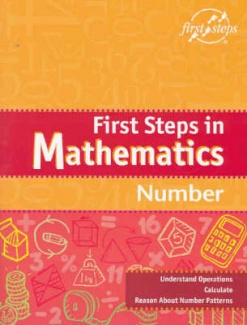
These students recognise that numbers may be used to signify quantity. They use words like smaller and bigger and same. (First Steps Mathematics) 


Here are some ways that you can teach children who are at this stage:

  • tie a laminated number card to a shoelace. The child threads on the correct amount of beads
  • play dough mats with number and pictures and instructions such as "make 5 red apples to go on the apple tree"
  • card games which require numeral and amount matching
  • dice games
  • hopscotch
  • counting songs
  • cooking 
  • pegs on a number card or number line card
  • building blocks (make a tower that is 5 blocks tall)
  • putting small items into egg cartons or ice cube trays (using plastic tweezers will help those pencil grip skills at the same time)
  • musical instruments like drums and xylophones - count the beats
  • foam or magnetic numbers
  • farm animal toys - use green square pieces of fabric as "paddocks" and write a number on each paddock. Children put the right amount of animals on each paddock
  • Same activity can be done with fish toys and blue circles of fabric
  • placing teddy counters (any counter actually!) into 5 frames and ten frames
  • car stickers - cut black strips of card for pretend roads and label each road with a number. Children stick the right amount of cars on the "road" . Possibilities are endless for this! Fairy stickers with rainbow coloured ribbons? 
  • fruit kebabs sticks - skewer cut fruit or grapes 
  • ants on a log - celery sticks filled with peanut butter - put 5 "ants" (sultanas!) on the peanut butter
  • candles on cupcakes (either real ones or use craft sticks and playdough "cakes")
  • play outside! Use leaves, sticks, gumnuts, pinecones and shells for counting! Sort, collect, make patterns. 


There are hundreds of ways to do this. Just be patient, creative and sneak in the vocabulary at every opportunity. 

Please share your favourite Emergent number ideas. 


Wednesday, 17 July 2013

Early Number Sense - Stages of Development


I have been reading Developing Efficient Numeracy Strategies Stage 1 to help me to plan my math lessons better.

EDIT: You can read the entire book here!
http://newcastleearlycareerteachers.files.wordpress.com/2012/08/0_dens1.pdf

As I mentioned in an earlier post, I am researching the stages of development that learners progress through. I attempted to compare the Stages in this book with the more recent research in First Steps in Mathematics: Number

Developing Efficient Numeracy Strategies
(Count Me in Too) Developmental Stages
First Steps in Mathematics
 Number Map of Development
Emergent
“The student knows some number words but cannot count visible items. The student either does not know the correct sequence of number words or cannot coordinate the words with items.” DENS p.8
Emergent
These students recognise that numbers may be used to signify quantity. They use words like smaller and bigger and same.
(FS states that this typically occurs between age 3-5. DENS does not give an age/grade level)
Perceptual
“The student can count perceived items but not those in concealed collections. Perceptual counting includes seeing, hearing or feeling items.” DENS p.8

Children at this stage “consistently apply the one-to-one principle of matching one number word to each item … they rely on counting by ones and always begin at one”. DENS p. 75.
Matching Phase
This students use one-to-one relations to share and count out.
They use numbers as adjectives to describe amounts of physical objects.
Can orally count to 10 or more.
Figurative
“The student can count concealed items but counts from one rather than counting on. Has a “figurative” notion of numbers and does not need to count perceived items, but counts from one to construct a number in additive situations”. DENS, p. 8
 (no similar stage)
Counting On
“The student can use advanced count-by-one strategies. Counts on rather than counting from “one”, to solve addition tasks or tasks involving a missing addend.” DENS p.8.
Quantifying Phase
These students use part-part-whole relations for numerical quantities. (decomposing)
Counting on and various strategies are used. Students don’t need to count from one.

What do you think, wise teacher friends? Does this look right to you?

Each day I am going to focus on one stage and post some teaching ideas! Please comment and share your ideas too! (Maybe I will attempt my first linky! What do you think??) 

Tomorrow I will blog about the EMERGENT stage. 


Monday, 15 July 2013

A new book in the mail AND a crafty sort of day!

Can it get any better?
A new book (another math one!) and a craft project completed!

Here is the book. I went to a conference last month led by Peter Sullivan and it was fabulous. So I ordered the book and I am going to dedicate one maths lesson a week to his problem solving approach.

Sorry about the glare! It's written by Peter Sullivan and Pat Lilburn who are both big names in maths teaching, plus it's published by Marilyn Burns/Scholastic.
The blurb says:
"I have $36 in my pocket. What bills and coins might I have?"
"How many different shaped rectangles can you make using 12 square tiles?"
"Thought provoking questions, like the ones above, can transform classrooms into dynamic learning environments. Open-ended questions, coined 'good questions' by Peter Sullivan and Pat Lilburn, pompt children to think creatively and critically. This useful book helps teachers define good questions, offers tips on how to create their own good questions, and includes a wide variety of questions for use in the classroom. Organised by subject area and grade group."

I am looking forward to using this book. Even better, several teachers from my school went to this conference and we have all be talking about it and experimenting with the approach.


Now, onto my craft. Yesterday I was at the local craft superstore and as I was wandering around I found a wooden cube, designed for photos. It was marked down to $5. Score! I had been planning on making or buying some story cubes for a while, but wasn't sure what I could use to make them with. I know some people use milk cartons but I didn't think they would be sturdy enough.

This was better. I am going to use it during Show and Tell time with my littlies. I only allow them to bring a book for Show and Tell time and last term I had let them ask each other questions about the books. Unfortunately, their questions were limited to "Do you like it?", "What is your favourite colour in it?" and "Where did you get it?". Most of the time the answer would be a mumbled "I forgot". Sigh. So it is time to model and teach how to ask a good question about a book. This links well with my upcoming focus on comprehension strategies. The cube has 6 words which I will use to frame a question. The words are: character, setting, emotion, start, problem, end. (I couldn't fit the word "beginning" in!)

Here are some photos - super easy! And I apologise - my OCD self is upset because the cube actually had a slant on one side so it isn't very straight and symmetrical. Also, if I made it again I would type and cut out the words instead of using stickers because I think it would be neater.

I used scrapbooking paper, black electrical tape, clear contact and glue. It SHOULD without 6 year olds handling it!


Feel free to use this idea! The possibilities are endless!

Professional Development - Teaching Effective Numeracy Strategies

This is what I am reading right now.


Not exactly easy bed time reading, but very, very helpful. This year all teachers at my school have to choose two areas in which they want to develop their professional knowledge. Either the principal or the assistant principal mentors us and we do some research in our classrooms. One area I wanted to focus on was early number skills. I noticed that some of the little people in my class just weren't understanding the curriculum so I wanted to look at the developmental stages and see where they were truly at. I knew that I was teaching them out of their Zone of Proximal Development. As we all know, the curriculum doesn't fit everyone!

So I have assessed all my class (individually) using the SENA test which is part of the Count Me in Too program. Aussie teachers may know what I am talking about, but basically it checks numeral identification, forward oral counting, backward oral counting, counting objects with 1:1, addition strategies, subtraction strategies and multiplicative strategies. My next step is to analyse the results, put the children into focus groups and then teach according to their needs.

Easy? Yup. Haha.

I'll be sure to share my learning as I go.


Saturday, 13 July 2013

50 posts!

Well, this post is number 51! I am hoping to share lots more ideas with you all, become more techno-savvy, and increase my followings.

Why?

Well, because the more followers I have, the more feedback I get, and the more creative ideas I can get! And THAT is why I love blogging!


For a completely random, but happy photo, here is my darling kitty cat. Her name is Daisy and she is a ragdoll. (sorry about the red eyes!)